Your coffee tastes only as good as the water you brew it with. Even premium beans and an expensive grinder cannot overcome poor water quality. When you brew coffee with purified water, you remove the minerals, chlorine, and contaminants that mask the natural flavors in your coffee beans. The difference is immediately noticeable in both aroma and taste.
This guide covers the best brewing methods for making exceptional coffee at home using purified water. You’ll learn why water quality matters, which brewing techniques work best, and how to adjust your approach for consistently delicious results.
Why Water Quality Matters for Coffee
Coffee is 98% water. That simple fact explains why water quality has such a dramatic impact on your cup. Tap water in many areas contains chlorine, heavy minerals, and other dissolved solids that interfere with extraction and create off-flavors.
Las Vegas tap water is particularly challenging for coffee lovers. The city’s water supply contains high levels of calcium and magnesium, creating hard water that builds up in coffee makers and produces bitter, metallic-tasting coffee. Many residents notice their tap water has an unpleasant taste that carries over into every beverage they make.
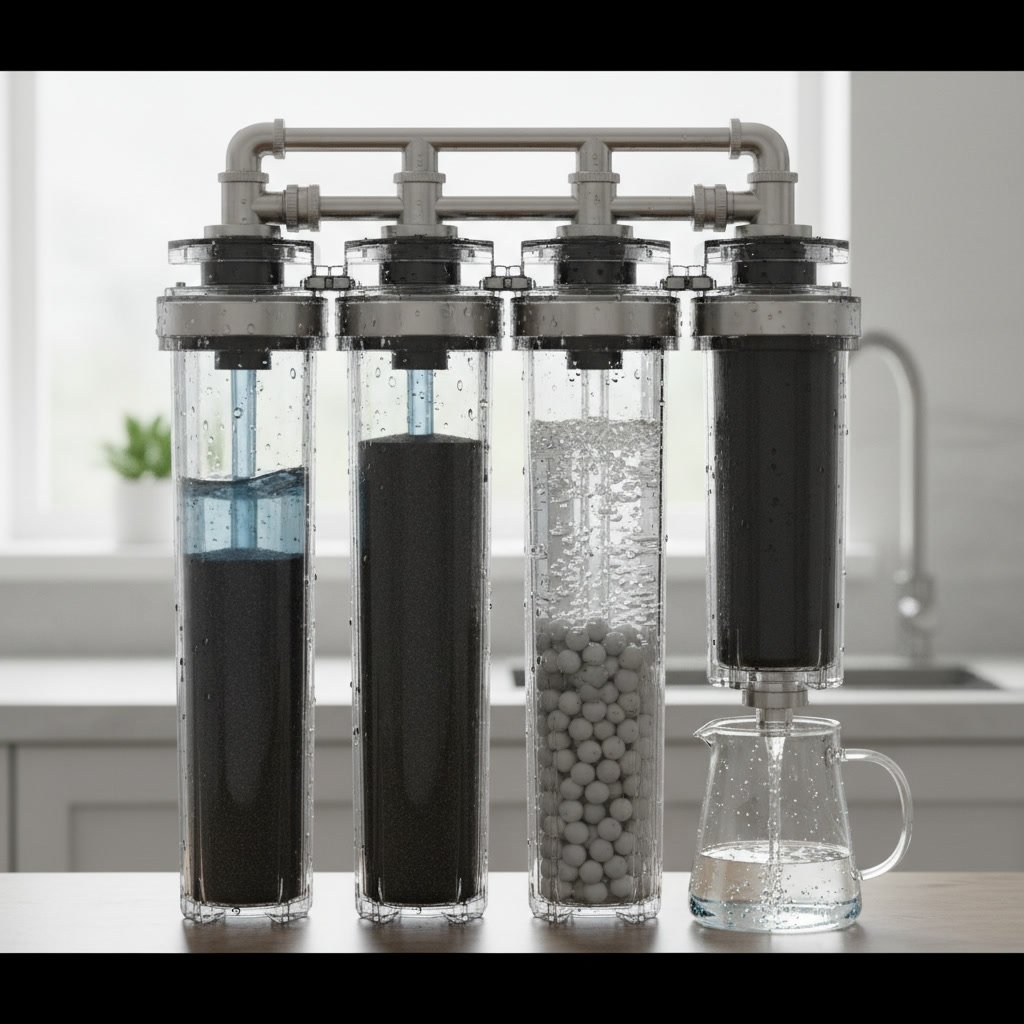
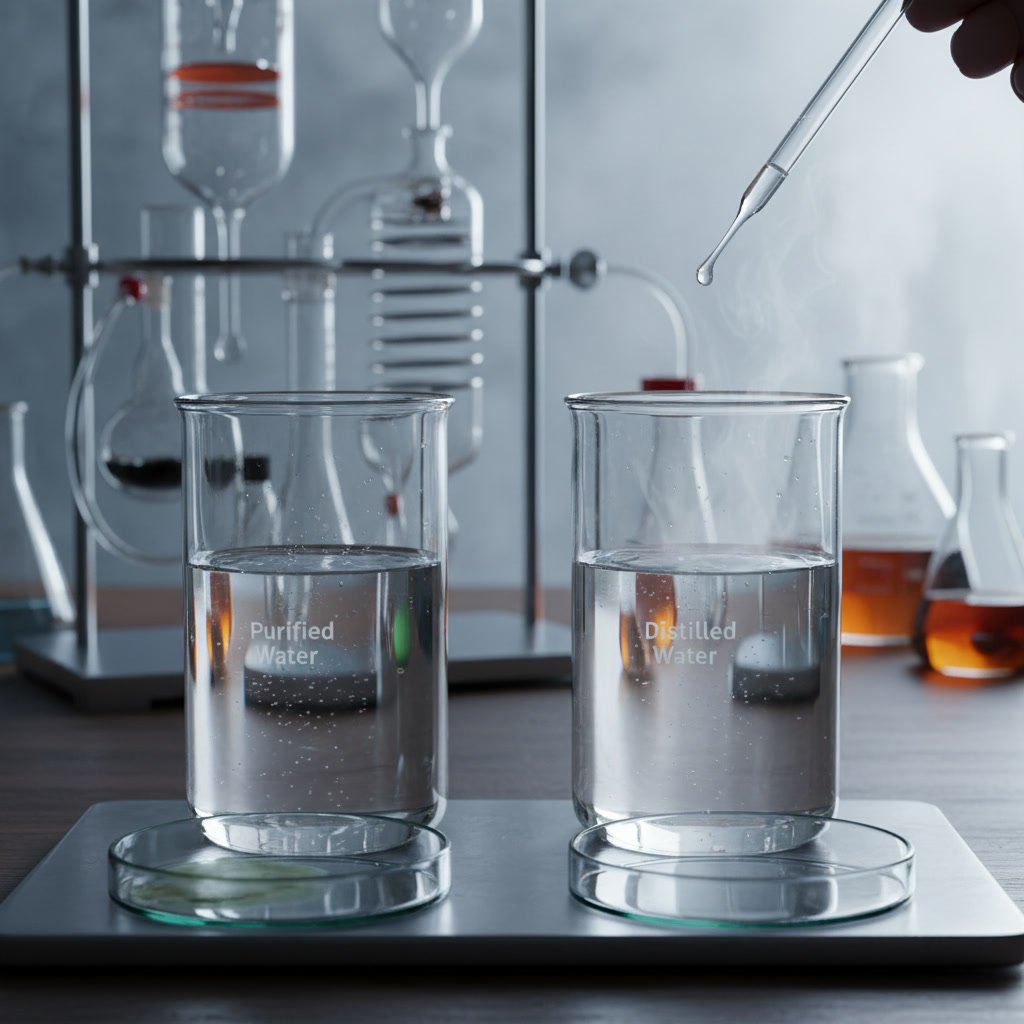
Purified water solves these problems through advanced filtration processes. At Nevada Crystal Premium, our six-step purification process removes chlorine, dissolved solids, bacteria, and other contaminants while maintaining consistent quality. This creates an ideal foundation for coffee brewing.
Clean water allows the natural oils and compounds in coffee beans to shine through. You’ll taste the fruity notes in Ethiopian beans, the chocolate undertones in Colombian varieties, and the nutty sweetness in Brazilian roasts. These subtle flavors disappear when poor water quality gets in the way.
The Pour Over Method
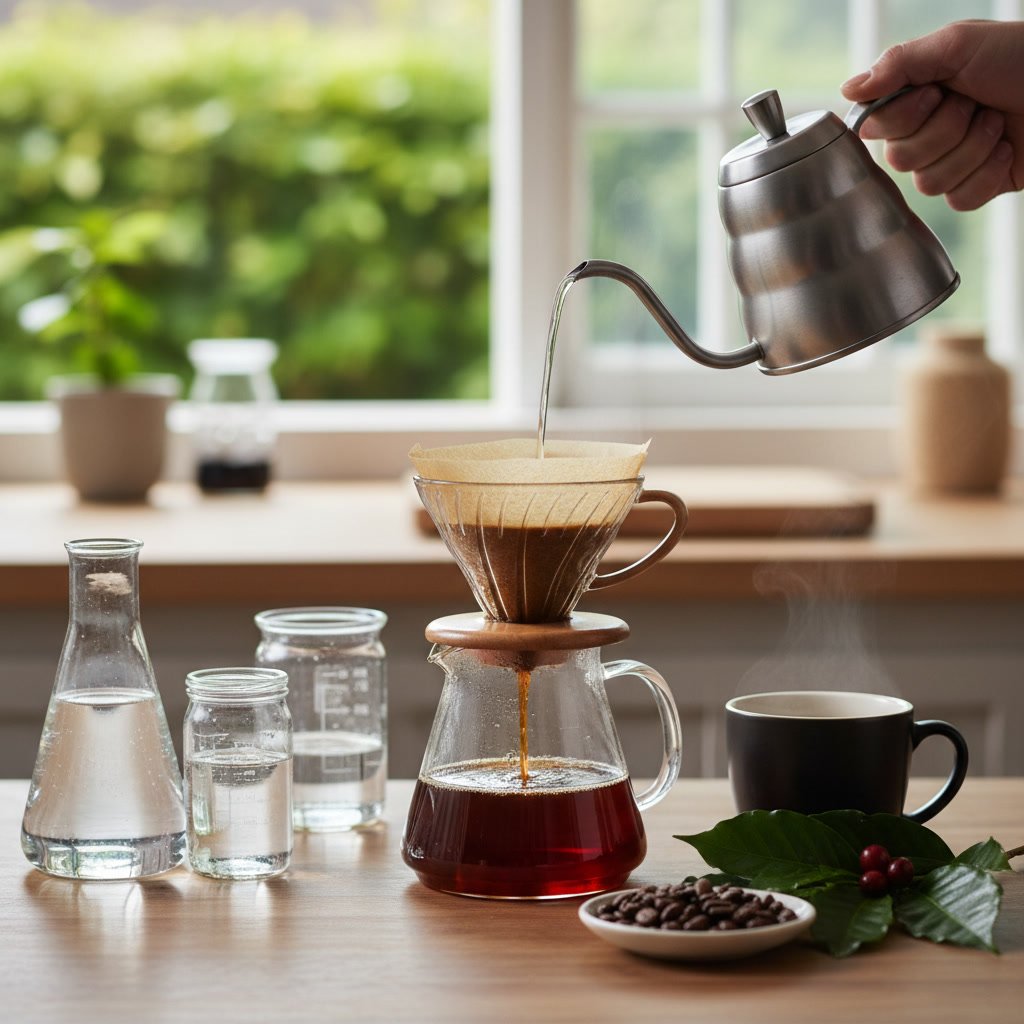
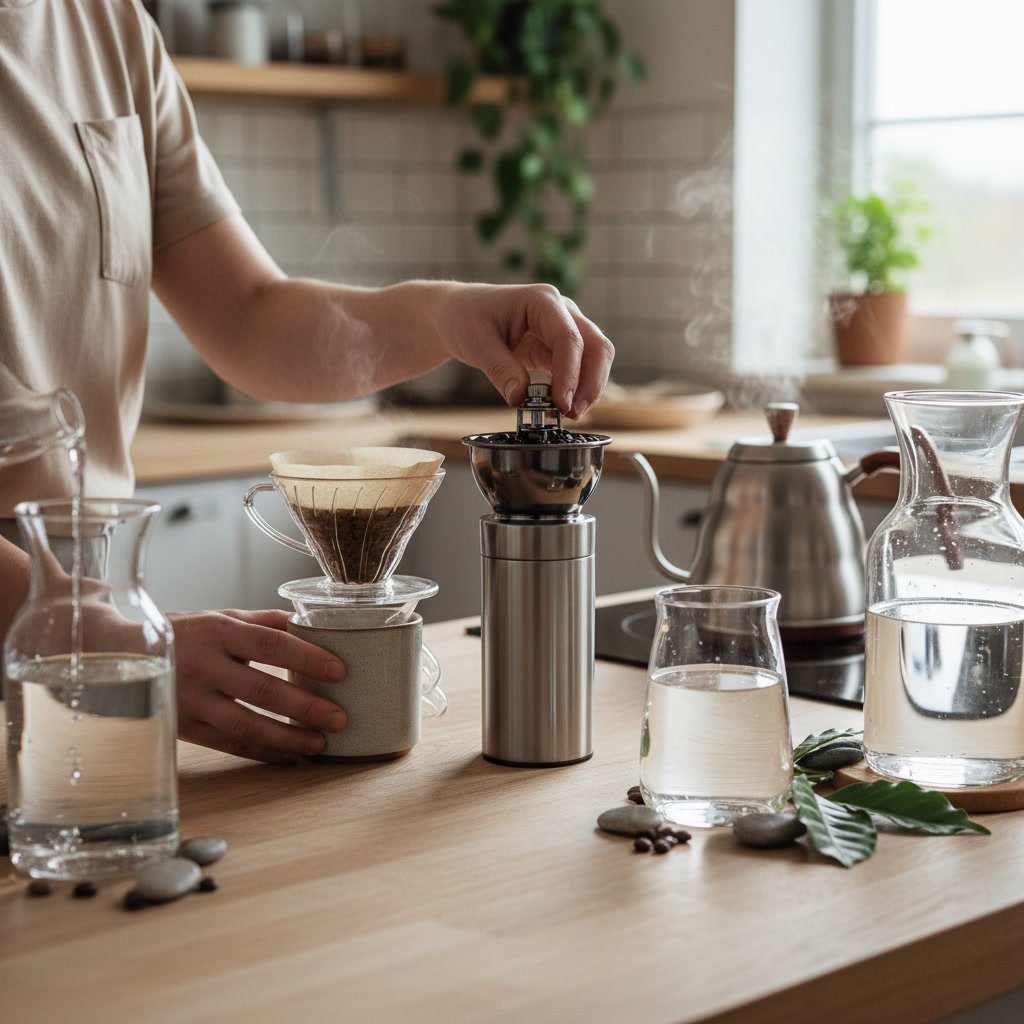
Pour over brewing gives you complete control over every variable. This method works exceptionally well when you brew coffee with purified water because you can taste exactly what the beans have to offer.
Start with a ratio of 1 gram of coffee for every 16 grams of water. For a standard 12-ounce cup, use 21 grams of coffee and 336 grams of purified water. Grind your beans to a medium consistency, similar to table salt.
Heat your purified water to between 195 and 205 degrees Fahrenheit. Water temperature significantly affects extraction. Too hot and you’ll pull bitter compounds. Too cool and you’ll under-extract, creating weak, sour coffee.
Step-by-Step Pour Over Technique
Place a paper filter in your dripper and rinse it with hot purified water. This removes paper taste and preheats the brewer. Discard the rinse water and add your ground coffee.
Begin with a bloom pour. Add water equal to twice the weight of your coffee (42 grams for 21 grams of coffee). Let it sit for 30 to 45 seconds. This allows the coffee to degas and prepares it for even extraction.
Continue pouring in slow, steady circles from the center outward. Maintain a consistent water level in the dripper. The entire process should take three to four minutes from start to finish.
Pro Tip: Keep your purified water in sealed containers to prevent absorption of odors from your refrigerator or storage area. Coffee is sensitive to even subtle flavors in your water.
French Press for Full Body Coffee
The French press produces a rich, full-bodied cup that highlights the oils and sediment filtered out by paper methods. This brewing style particularly benefits from purified water because nothing stands between you and the coffee’s natural character.
Use a coarser grind than pour over, similar to breadcrumbs. The standard ratio is 1 gram of coffee to 15 grams of water, though you can adjust based on preference. For a 34-ounce French press, use 60 grams of coffee and 900 grams of purified water.
Preheat your French press with hot purified water, then discard it. Add your ground coffee and pour in all your brewing water at once. Give it a gentle stir to ensure all grounds are saturated.
Place the lid on top with the plunger pulled all the way up. Let it steep for four minutes. Press the plunger down slowly and steadily. Pour immediately to prevent over-extraction.
French press coffee continues extracting even after you press. Transfer any coffee you won’t drink right away to a thermal carafe to maintain quality.
Cold Brew with Purified Water
Cold brew creates a smooth, low-acid coffee concentrate perfect for hot weather. This method requires significant time but minimal effort, and the results showcase why brewing coffee with purified water matters.
Use a ratio of 1 gram of coffee to 8 grams of water for concentrate, or 1 to 5 for ready-to-drink cold brew. Grind your beans coarse. Combine the coffee and room temperature purified water in a container.
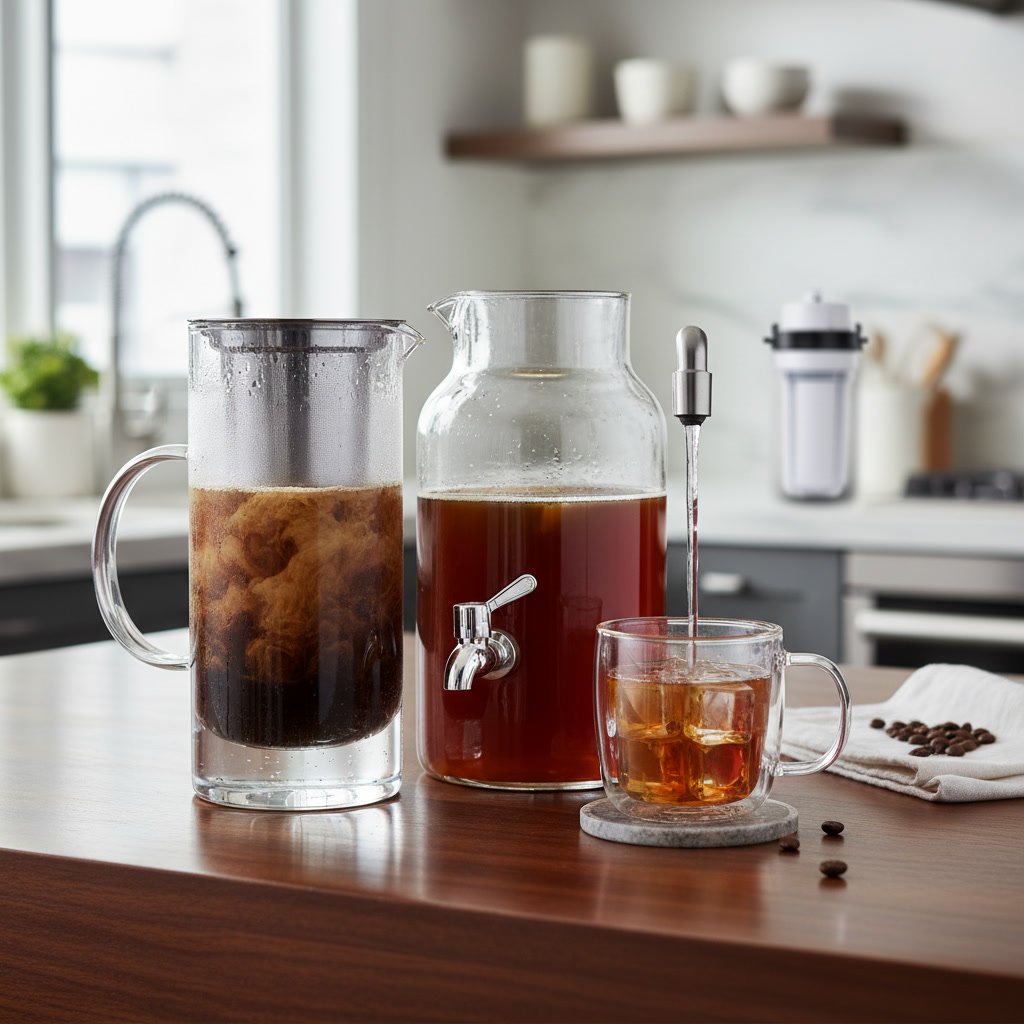
Stir gently to ensure all grounds are wet. Cover and let it steep at room temperature or in the refrigerator for 12 to 24 hours. Longer steeping times create stronger, more concentrated results.
Filter the mixture through a fine mesh strainer or coffee filter. Store the concentrate in the refrigerator for up to two weeks. Dilute with additional purified water when serving, typically at a 1:1 ratio for concentrate.
Cold brew made with purified water tastes noticeably cleaner than versions made with tap water. You avoid the chlorine and mineral flavors that become more apparent in cold extraction.
Automatic Drip Coffee Makers
Automatic drip machines remain the most popular home brewing method. Using purified water in these machines improves taste and extends equipment life by preventing mineral buildup.
Most drip machines work best with a medium grind. Use the same 1:16 ratio discussed earlier, or follow your machine’s recommendations. Fill the reservoir with cold purified water rather than hot, as the machine is designed to heat water to the optimal temperature.
Clean your coffee maker monthly to remove oils and residue. Even with purified water, coffee oils accumulate and turn rancid. Run a brew cycle with equal parts purified water and white vinegar, then run two cycles of plain purified water to rinse.
Many Las Vegas residents find that switching to purified water dramatically reduces descaling needs. The lack of calcium and magnesium means less mineral buildup in heating elements and internal components.
Espresso Machines and Purified Water
Espresso machines represent a significant investment, and water quality directly impacts both performance and longevity. Brewing espresso with purified water protects expensive equipment while improving shot quality.
Espresso requires fine, consistent grounds and precise water temperature between 195 and 205 degrees Fahrenheit. The brewing pressure forces water through tightly packed coffee in 25 to 30 seconds, extracting concentrated flavor.
Hard tap water quickly damages espresso machines. Scale builds up in boilers, blocks internal passages, and affects temperature stability. Repair costs can run into hundreds of dollars. Using purified water prevents these problems entirely.
Some espresso enthusiasts prefer water with specific mineral content for optimal extraction. However, starting with purified water and adding minerals in controlled amounts gives you far better results than using inconsistent tap water. Most home users achieve excellent results with purified water as-is.
Key Takeaway: Espresso machines with internal reservoirs work perfectly with purified water. If you have a plumbed machine, consider installing a dedicated water line from a purification system to protect your investment.
Adjusting Your Coffee Routine
Switching to coffee with purified water often means adjusting your brewing parameters. Water composition affects extraction differently than tap water, so your usual recipe might need modification.
You may notice that coffee brewed with purified water tastes slightly more extracted than before. This happens because clean water pulls flavors more efficiently. Try using slightly less coffee or reducing brew time by 30 seconds.
Some people find purified water produces coffee that lacks body compared to their previous results. This typically indicates that mineral content in their old water was masking poor extraction. Focus on proper grind size and brewing technique rather than returning to lower quality water.
Keep notes when you change variables. Record your coffee dose, water amount, grind setting, and brew time. Small adjustments make a significant difference, and notes help you replicate successful results.
Storing Purified Water for Coffee
Proper storage maintains the quality of your purified water between brewing sessions. Water can absorb odors and pick up contaminants from its environment, affecting your coffee’s taste.
Store purified water in food-grade containers away from strong odors. Glass and BPA-free plastic both work well. Keep containers sealed to prevent dust and airborne contaminants from entering.
Avoid storing purified water in direct sunlight or near heat sources. Room temperature storage is fine for water you’ll use within a few days. For longer storage, refrigeration helps maintain freshness.
If you order regular water delivery, you’ll always have fresh purified water available for your coffee and other beverages. Nevada Crystal Premium delivers every four weeks, ensuring you never run out of high-quality water for brewing.
The Cost-Benefit Analysis
Brewing coffee with purified water costs more upfront than using tap water, but the benefits extend beyond taste. You’ll spend less on equipment repairs and replacements while enjoying significantly better coffee.
A single repair visit for a descaled espresso machine often costs more than several months of purified water delivery. Coffee makers, electric kettles, and other brewing equipment last longer when you use clean water. The extended equipment life alone justifies the water cost.
Factor in the improved taste as well. When your coffee tastes better, you waste less. You’ll throw away fewer bad batches and drink more of what you brew. Quality beans show their full potential, meaning you get more value from your coffee purchases.
Many Las Vegas residents who switch to purified water for coffee find they visit cafes less often. Making cafe-quality coffee at home saves substantial money over time while offering greater convenience.
Frequently Asked Questions
Does purified water make coffee taste better than spring water?
Purified water offers more consistency than spring water for coffee brewing. Spring water mineral content varies by source and can interact unpredictably with coffee compounds. Purified water provides a clean, neutral base that lets coffee flavors come through clearly. Some coffee professionals prefer adding specific minerals to purified water rather than relying on spring water’s variable composition.
Can I use alkaline water to brew coffee?
You can brew coffee with alkaline water, but the higher pH may affect extraction and taste. Coffee extraction works best with water close to neutral pH. Alkaline water can make coffee taste flat or dull by neutralizing some of the acids that provide brightness and complexity. Most coffee experts recommend purified water at neutral pH for optimal brewing results.
How long does purified water stay fresh for coffee brewing?
Properly stored purified water remains fresh for several weeks or months. Keep it in sealed, food-grade containers away from odors and contaminants. Once opened, use water within a week for best results. Water doesn’t spoil like food, but it can absorb flavors from its environment or develop off-tastes if exposed to light or heat for extended periods.
Will purified water prevent my coffee maker from getting clogged?
Purified water significantly reduces mineral buildup that clogs coffee makers, kettles, and espresso machines. The absence of calcium and magnesium means no scale formation in heating elements or internal passages. You’ll still need to clean coffee oils and residue regularly, but descaling becomes unnecessary. This extends equipment life and maintains consistent brewing temperatures.
What water temperature should I use for different brewing methods?
Most hot brewing methods work best between 195 and 205 degrees Fahrenheit. Pour over and drip coffee typically use water at 200 to 205 degrees. French press can handle slightly cooler water at 195 to 200 degrees. Cold brew uses room temperature or cold water and relies on time rather than heat for extraction. Espresso machines regulate water temperature automatically, usually around 200 degrees.
Making Better Coffee at Home
Water quality forms the foundation of exceptional coffee. When you brew coffee with purified water, you remove the barriers between you and the complex flavors in quality beans. The investment in clean water pays dividends in taste, equipment longevity, and brewing consistency.
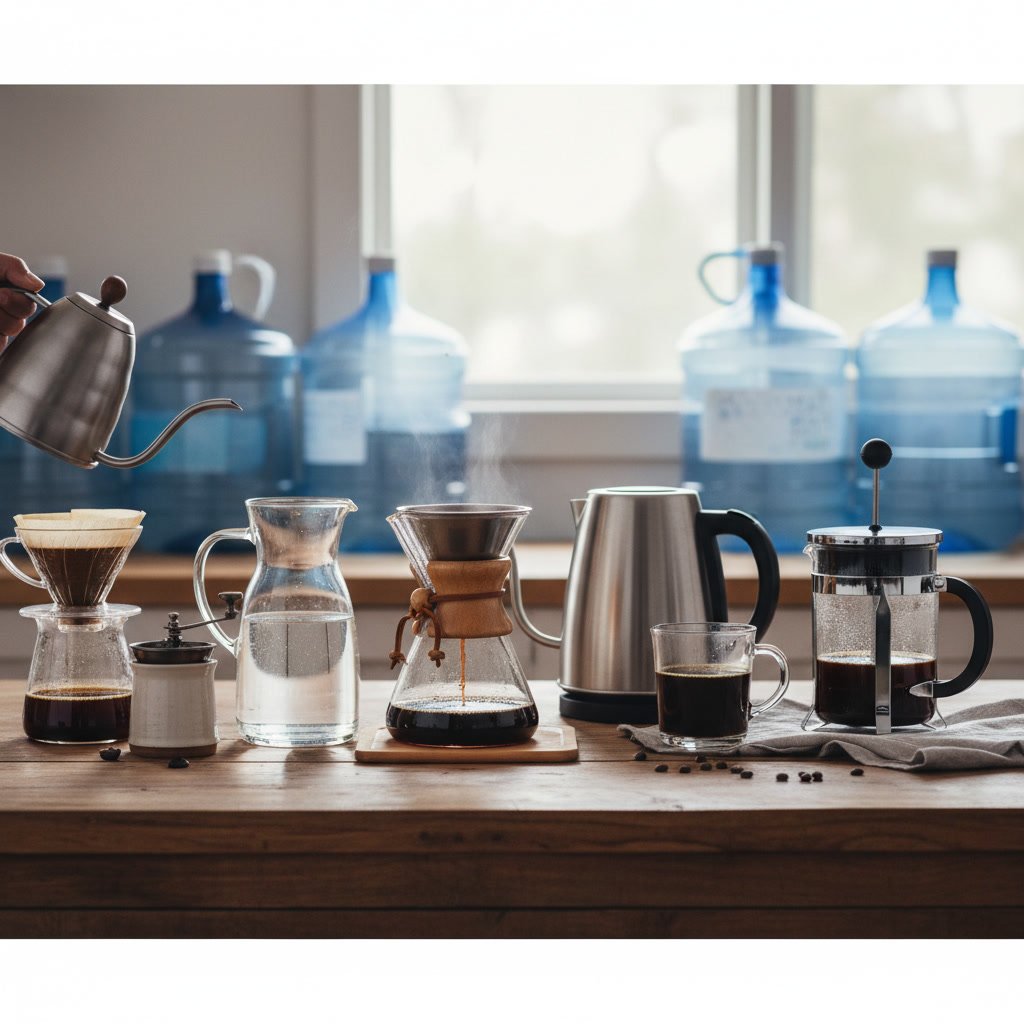
Whether you prefer pour over precision, French press richness, or the convenience of automatic drip, purified water improves results across all brewing methods. The difference becomes obvious from your first cup.
Nevada Crystal Premium provides coffee and purified water delivery throughout Las Vegas, making it easy to keep high-quality water available for all your brewing needs. Our six-step purification process ensures consistent quality in every bottle, and our four-week delivery schedule means you’ll never run out. Call +17028920535 to set up delivery service and start brewing better coffee tomorrow.