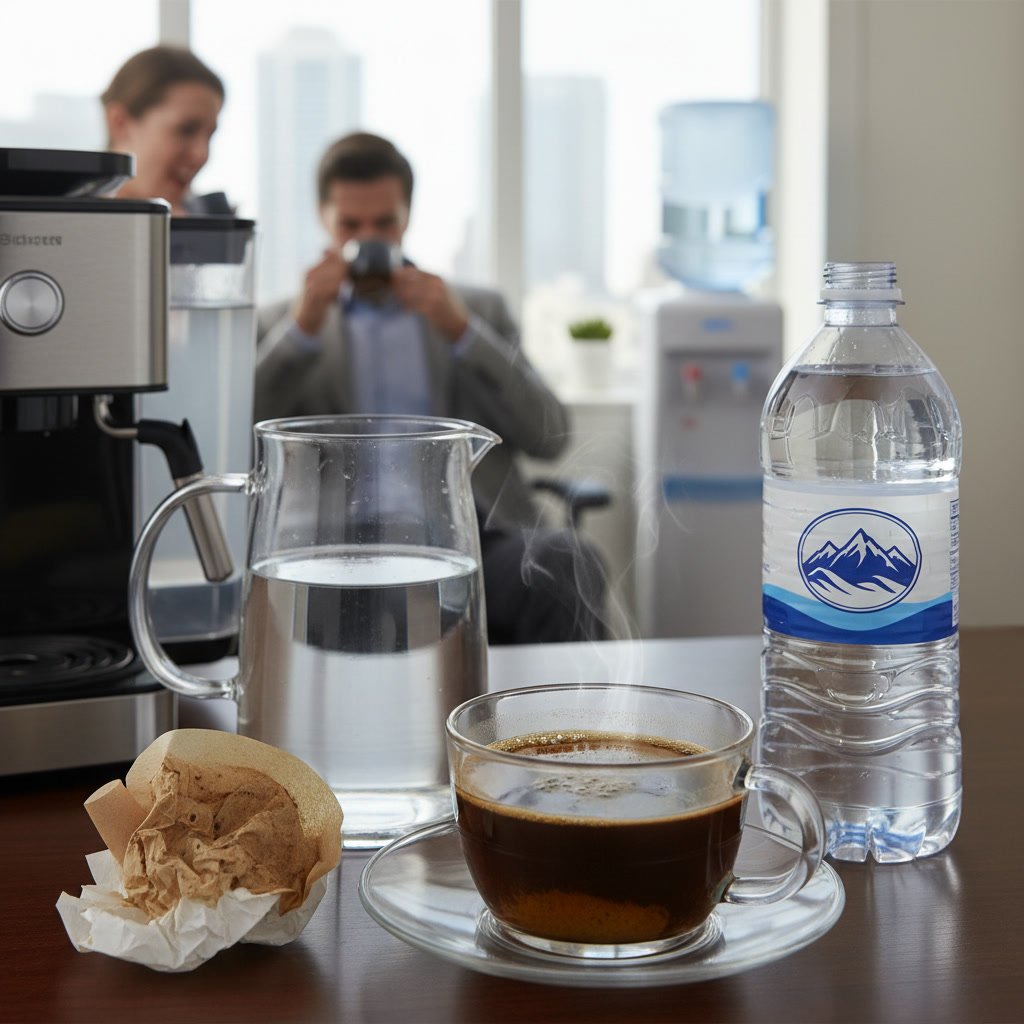
When your office coffee tastes bad water quality is almost always the culprit. Coffee is 98% water, so any off-flavors, mineral buildup, or chemical residues in your brewing water will dominate every cup. If employees are complaining about bitter, metallic, or flat-tasting coffee despite using premium beans, the problem isn’t your coffee maker or roast selection. It’s the water running through your system.
Why Water Makes or Breaks Your Office Coffee
Most offices brew coffee using tap water without considering its composition. Water carries dissolved minerals, chlorine, and other contaminants that directly affect taste. The chemical makeup of your water determines how well it extracts flavor compounds from coffee grounds during brewing. Hard water with excessive calcium and magnesium creates a chalky mouthfeel and prevents proper extraction. Chlorinated water adds a chemical aftertaste that masks subtle coffee notes.
Temperature stability during brewing also depends on water purity. Mineral deposits build up inside coffee makers, reducing heating efficiency and causing inconsistent brew temperatures. When water doesn’t reach the optimal 195-205 degree range, extraction suffers and flavors turn sour or weak.
Your Coffee Has a Persistent Metallic or Chemical Taste
A metallic flavor in brewed coffee signals high iron, copper, or zinc content in your water supply. Old pipes and municipal treatment processes introduce these metals, which bind to coffee oils and create an unpleasant tinny aftertaste. This flavor persists even when you use fresh beans and clean equipment.
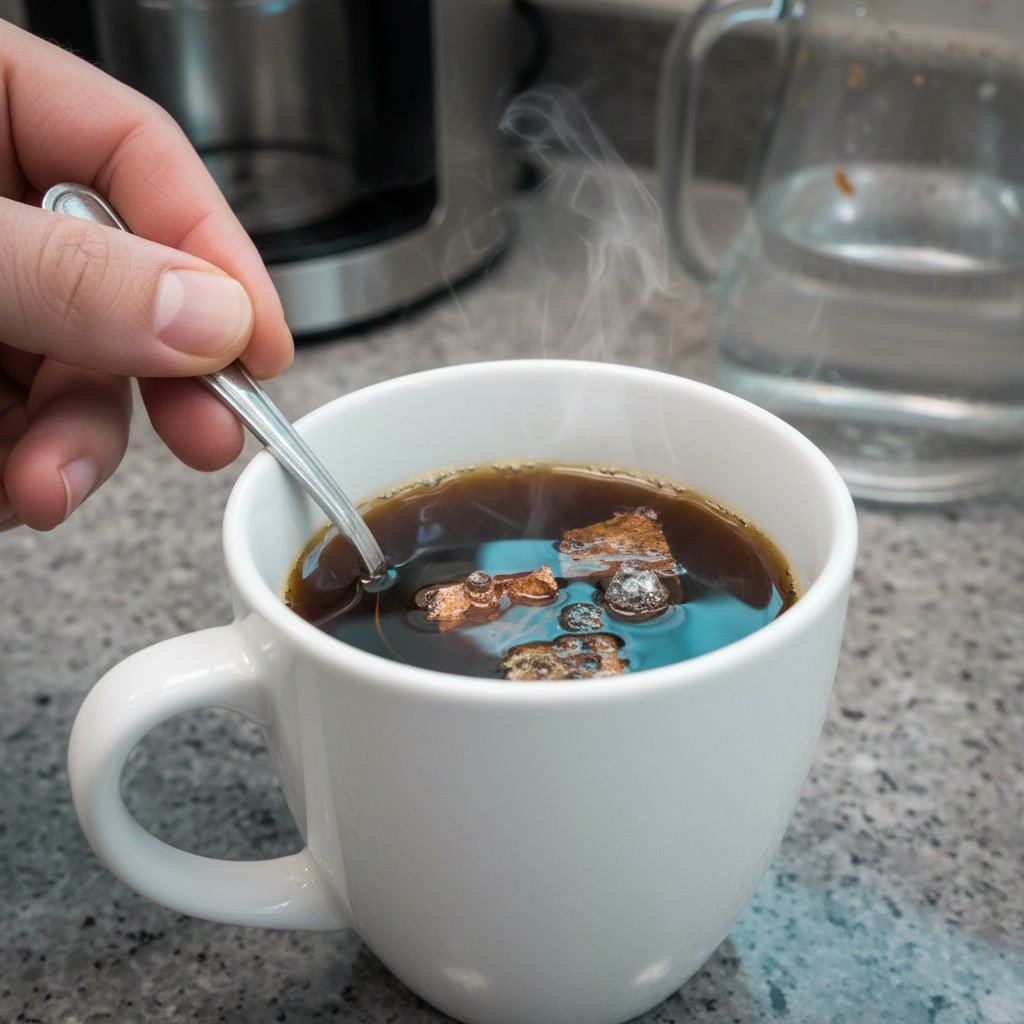
Chlorine and chloramine used in municipal water treatment create a chemical or bleach-like taste. These disinfectants are necessary for public health but devastating for coffee flavor. The compounds react with coffee’s organic acids during brewing, producing bitter chlorophenols that overpower any intended flavor profile.
White Buildup Appears Inside Your Coffee Maker
Visible white or yellowish scale inside your coffee maker, especially around heating elements and water reservoirs, indicates hard water with high mineral content. This calcium and magnesium buildup doesn’t just look unappealing. It actively degrades coffee quality by creating hot spots, reducing water flow, and harboring bacteria in porous deposits.
Descaling your machine temporarily removes buildup, but if you continue using the same water source, scale returns within weeks. The minerals also bind with coffee oils during brewing, creating a chalky sediment in carafes and mugs. Employees notice this gritty texture, which makes even the best coffee undrinkable.
Coffee Flavor Changes Throughout the Day in Las Vegas
If your morning brew tastes acceptable but afternoon pots turn bitter or flat, inconsistent water quality is the issue. Municipal water treatment plants adjust chemical levels throughout the day based on demand and testing. In desert climates, temperature fluctuations affect how minerals dissolve and concentrate in water lines.
Pressure changes in building plumbing can also stir up sediment that normally settles in pipes. This sediment carries rust, biofilm, and concentrated minerals directly into your coffee maker. Employees notice the difference between the first pot and the fourth, creating frustration and wasted coffee.
Comparing Tap Water to Purified Water for Brewing
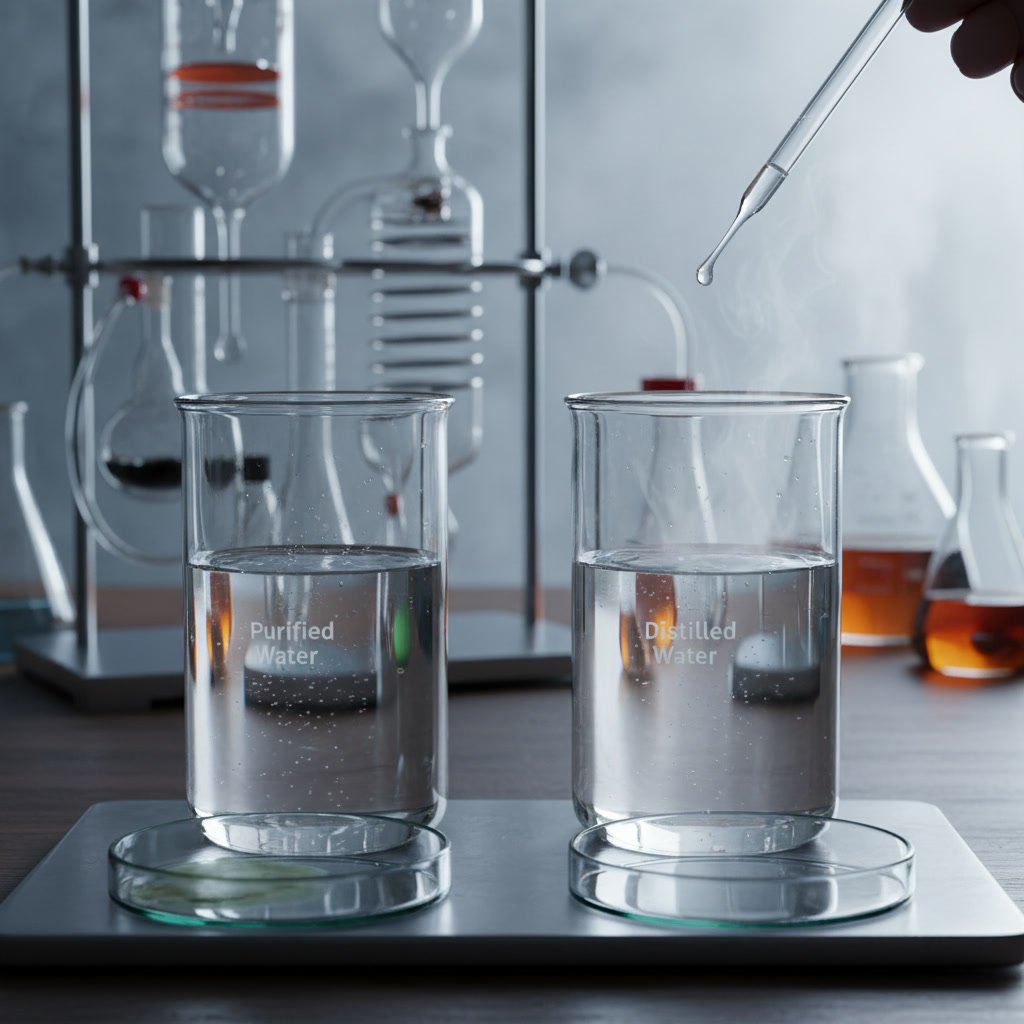
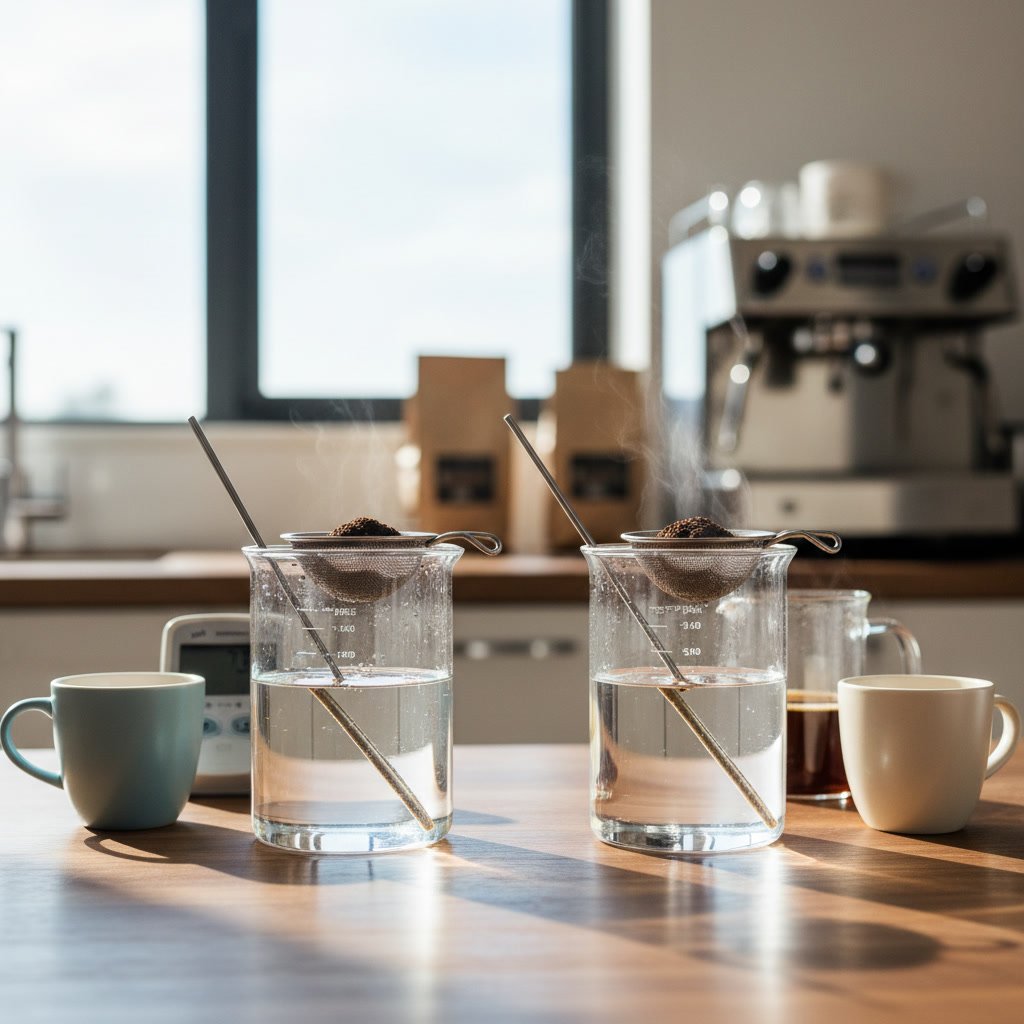
Testing both water types side by side reveals dramatic differences. Brew identical coffee using tap water and high-quality purified water, then taste them blind. The purified water batch will show clearer flavor definition, balanced acidity, and a clean finish. The tap water version often tastes muddy, overly bitter, or astringent.
Total dissolved solids, measured in parts per million, should fall between 75-250 for optimal coffee extraction. Most tap water exceeds 300 ppm, while properly purified water hits the sweet spot. This range allows water to extract desirable flavor compounds without introducing competing tastes from minerals or chemicals.
pH also matters significantly. Water that’s too alkaline above 8.0 produces flat, lifeless coffee. Water below 6.5 turns overly acidic and sour. Understanding why tap water quality varies helps explain these brewing inconsistencies.
Employees Complain Despite Using Premium Coffee Beans
When your office invests in specialty roasts or gourmet blends but staff still avoid the break room coffee, water is undermining your investment. Premium beans have nuanced flavor profiles that bad water completely obliterates. The chlorine, metals, and excess minerals don’t just add off-flavors. They chemically react with coffee compounds to create new unpleasant tastes that weren’t present in either ingredient alone.
Single-origin beans known for fruity or floral notes become indistinguishable from cheap grocery store coffee when brewed with poor water. Your purchasing decisions mean nothing if the brewing medium sabotages extraction. This wastes money and frustrates employees who know good coffee when they taste it.
Your Coffee Maker Requires Frequent Repairs or Replacement
Hard water shortens equipment lifespan dramatically. Heating elements encased in mineral scale fail prematurely. Water pumps clog with sediment. Plastic components degrade faster when exposed to chlorine and other oxidizing chemicals. If your office replaces coffee makers every 12-18 months instead of the expected four to five years, water quality is accelerating wear.
Repair costs add up quickly. Service calls for descaling, valve replacement, and pump repairs often exceed the price of addressing the root cause. Switching to filtered or delivered purified water protects your equipment investment while simultaneously improving taste.
Coffee Tastes Different From Your Home Brew
Employees who brew excellent coffee at home but can’t replicate those results at work are experiencing a water quality gap. Many home users already filter their water or live in areas with better municipal treatment. When they arrive at the office and use the same beans and similar equipment but get inferior results, the variable is water.
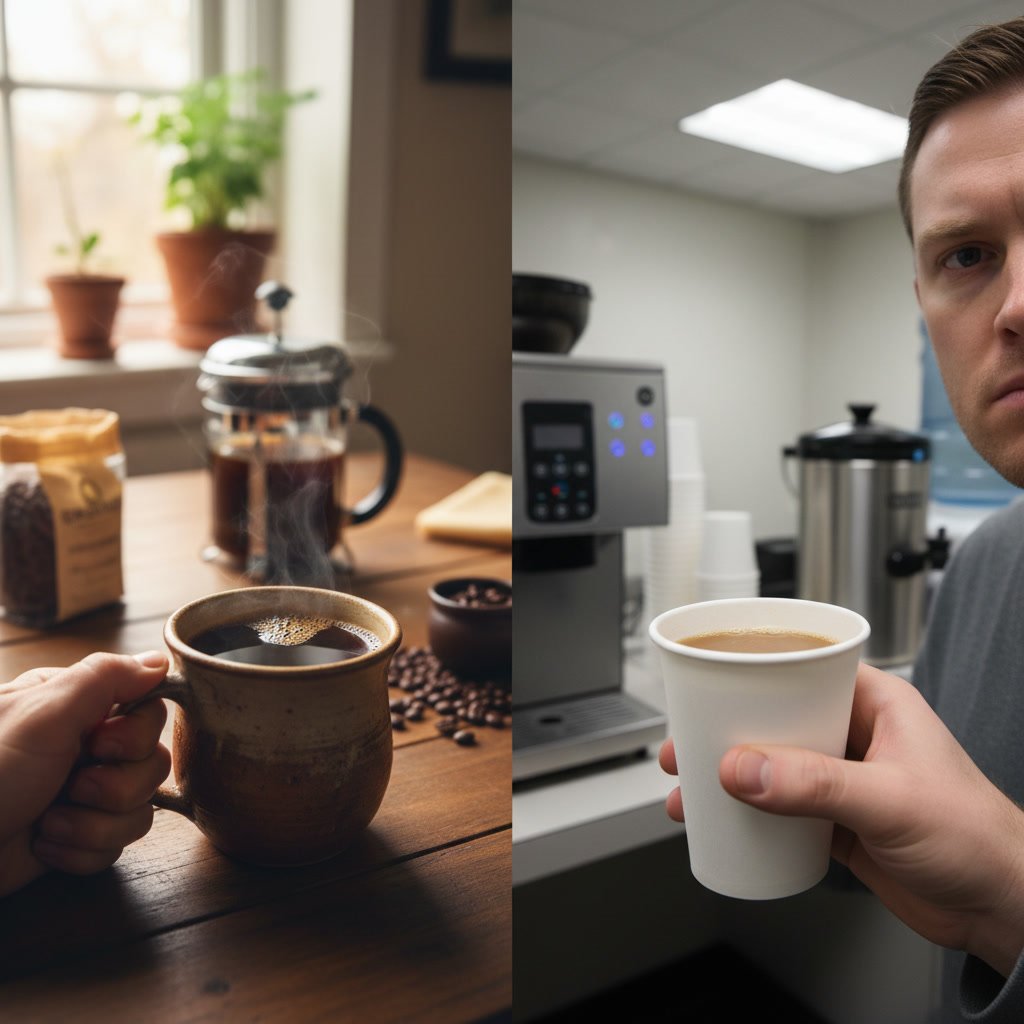
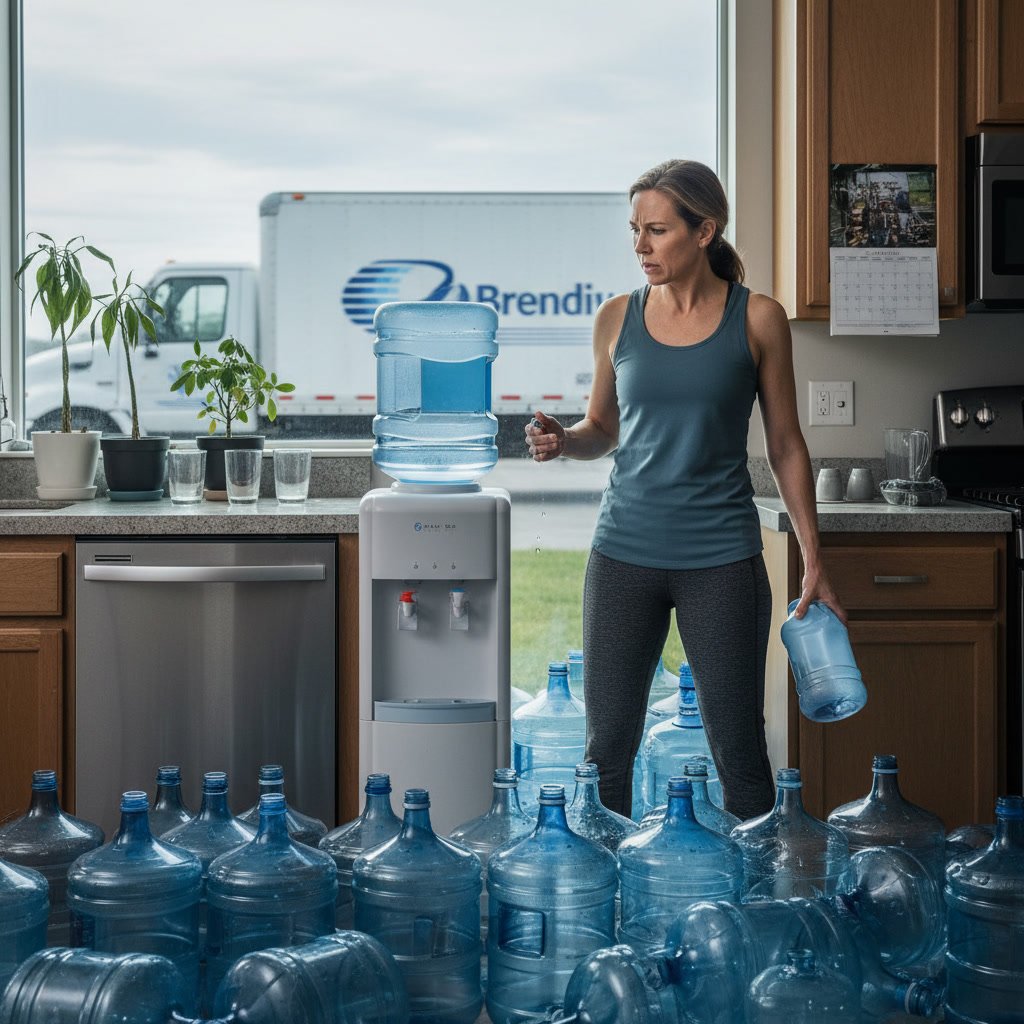
This discrepancy affects morale and productivity. Staff may start bringing coffee from home or making daily coffee shop runs, both of which reduce the value of providing office coffee. Recognition that water makes the difference often prompts facility managers to explore bottled water delivery solutions specifically for brewing.
Step-by-Step Process to Diagnose Water Issues
First, smell your tap water before it touches coffee grounds. Any chlorine, sulfur, or musty odors will transfer directly to brewed coffee. Second, inspect your coffee maker’s water reservoir and heating chamber for visible scale or discoloration. Third, taste plain hot water from your machine. If the water itself tastes unpleasant, coffee brewed from it will taste worse.
Fourth, check your building’s water source and age of plumbing. Buildings constructed before 1980 often have aging pipes that leach metals. Fifth, compare your coffee quality immediately after municipal water maintenance or treatment changes. Sudden flavor shifts correlate with water system adjustments.
Finally, conduct the side-by-side brewing test using store-bought purified water versus your tap supply. This eliminates guesswork and provides clear evidence whether water replacement will solve your coffee problems. Many offices find this simple experiment justifies switching to regular water delivery service.
How Alkaline and Electrolyte Water Affect Coffee Brewing
Some offices experiment with alkaline water for health benefits but find it produces flat, dull coffee. The elevated pH above 8.5 suppresses acidity that gives coffee brightness and complexity. While alkaline water serves specific purposes, coffee brewing isn’t one of them.
Electrolyte water contains added minerals that can interfere with extraction chemistry. The sodium, potassium, and magnesium ratios designed for hydration don’t match the mineral profile that extracts balanced coffee flavor. For brewing purposes, clean purified water or properly balanced spring water produces consistently better results.
Better Water Means Better Workplace Culture
Fixing your office coffee situation creates ripple effects beyond taste. Employees gather more frequently around a coffee station that produces quality drinks. These informal interactions strengthen team relationships and spark creative collaboration. When people actually enjoy the coffee, break room conversations last longer and become more meaningful.
Providing genuinely good coffee also signals that management values employee experience and pays attention to details. It’s a small investment that yields outsized returns in morale and retention. Bad coffee, conversely, becomes a running joke that reflects poorly on workplace quality overall. The difference between acceptable and excellent office coffee almost always comes down to water purity.
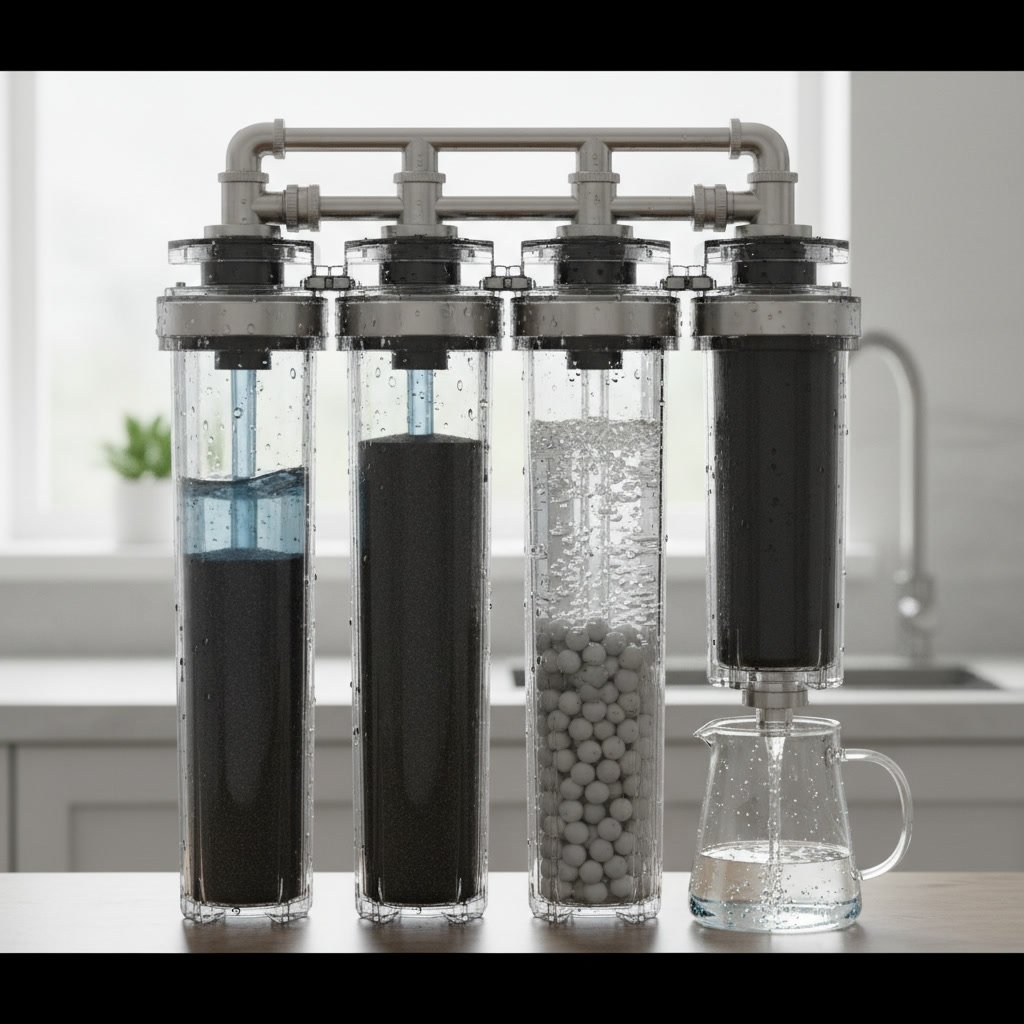
Nevada Crystal Premium has served the Las Vegas business community for over 12 years with purified water that transforms office coffee from tolerable to exceptional. Our six-step purification process removes the chlorine, metals, and excess minerals that ruin coffee flavor while maintaining the balanced mineral content needed for proper extraction. Each delivery brings fresh water in convenient sizes that fit any break room setup.
If your team deserves better coffee and you’re ready to solve the water quality problem permanently, reach out to discuss delivery options tailored to your office needs. Call +17028920535 to schedule your first delivery and taste the difference that proper water makes in every cup your office brews.