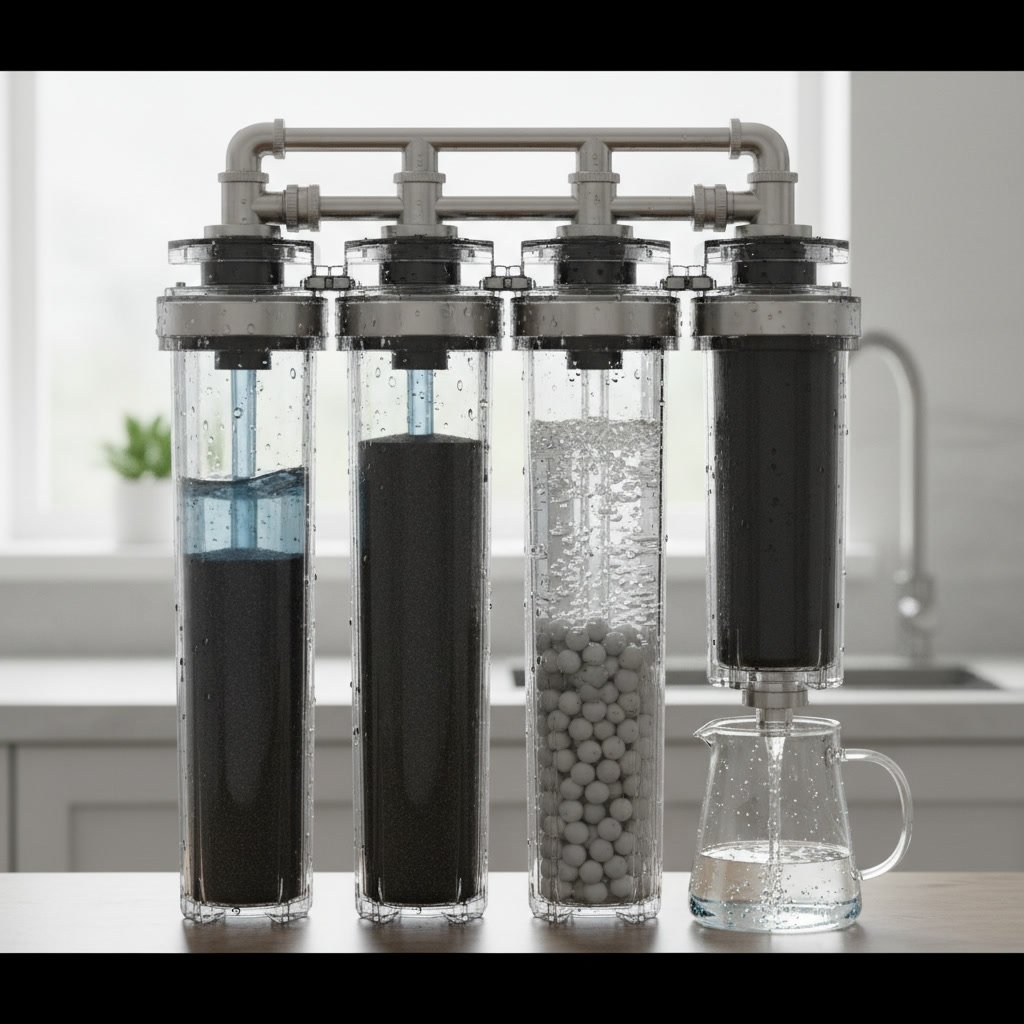
Carbon filtration and micro-carbon filtration work as two distinct stages in water purification, each targeting specific contaminants. Standard carbon filters remove chlorine, volatile organic compounds, and larger particles, while micro-carbon filtration captures smaller molecules like pesticides and pharmaceutical residues that escape the first pass. Understanding these carbon filtration stages helps you recognize what makes truly purified drinking water different from basic filtered tap water.
Why Water Purification Requires Multiple Treatment Steps
Municipal water treatment removes dangerous pathogens and sediment, but it leaves behind dozens of chemical compounds that affect taste, smell, and long-term health. Chlorine keeps water safe during transport through miles of pipes, yet it creates byproducts when it reacts with organic matter. Heavy metals leach from aging infrastructure. Agricultural runoff introduces herbicides and fertilizers into source water.
A single filtration method cannot address this range of contaminants. Each purification technology targets specific molecular sizes and chemical properties. That’s why advanced systems layer multiple techniques, with carbon playing a central role at two different stages.
The Science Behind Activated Carbon Adsorption
Activated carbon works through adsorption, not absorption. The carbon undergoes heat treatment that creates millions of microscopic pores across its surface. One pound of activated carbon contains a surface area exceeding 100 acres when you account for all those tiny cavities.
Contaminant molecules stick to this porous surface through weak intermolecular forces. Chlorine, benzene, and trihalomethanes bond readily to carbon because their molecular structure matches the surface chemistry. The larger the surface area, the more contaminants the filter can hold before it saturates and needs replacement.
What Standard Carbon Filtration Removes
The first carbon stage in a purified water system typically uses granular activated carbon or carbon blocks with pore sizes ranging from 0.5 to 50 microns. This stage excels at removing:
- Chlorine and chloramines that cause chemical taste and smell
- Volatile organic compounds like benzene and toluene
- Trihalomethanes formed when chlorine reacts with organic matter
- Some pesticides and herbicides, particularly larger molecules
- Industrial solvents that may contaminate groundwater
- Radon and other dissolved gases
Standard carbon filtration dramatically improves taste by removing the compounds your taste buds and nose detect most easily. This stage handles the bulk removal of organic chemicals, but it cannot capture everything on the first pass.
The Gap Between First-Stage and Complete Purification
Standard carbon filters miss smaller molecules and certain chemical structures that don’t adsorb well to conventional activated carbon. Pharmaceutical residues, endocrine disruptors, and some pesticide metabolites slip through because they’re either too small or have the wrong molecular charge.
Water leaving the first carbon stage still contains trace contaminants measured in parts per billion. For many Las Vegas homes dealing with tap water quality challenges, this partial removal improves taste but doesn’t achieve true purification. That’s where micro-carbon filtration becomes essential.
How Micro-Carbon Filtration Differs in Las Vegas Water Treatment
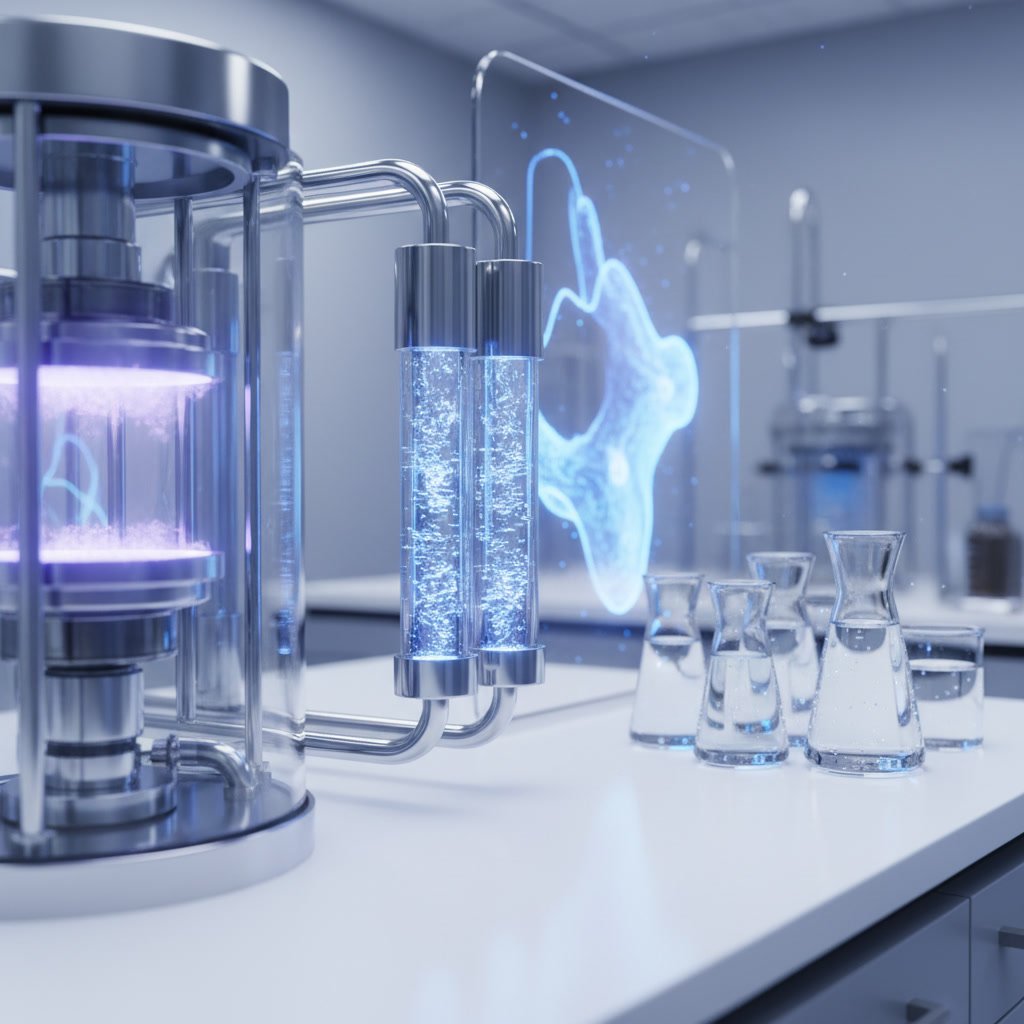
Micro-carbon filters use activated carbon with much smaller pore sizes, often below 0.5 microns, and sometimes incorporate catalytic carbon that enhances chemical reactions. This second stage targets contaminants that escaped the first pass.
The key difference lies in contact time and surface chemistry. Micro-carbon filters force water through a denser carbon bed at slower flow rates, giving smaller molecules more opportunity to adsorb. Some systems use coconut shell carbon in this stage because it produces a harder, more durable medium with optimal pore distribution for catching tiny organic molecules.
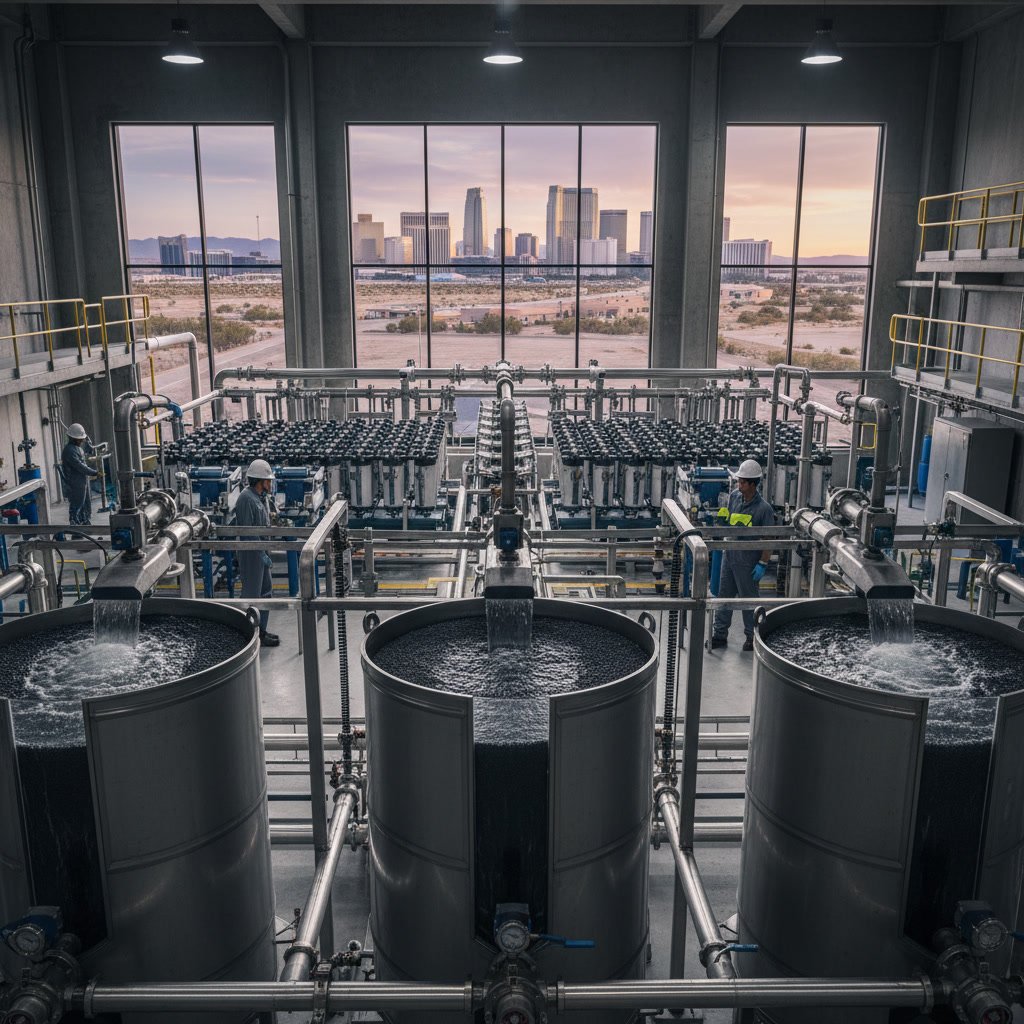
In Las Vegas, where source water travels through extensive treatment and distribution systems, this second carbon stage removes residual disinfection byproducts and trace pharmaceuticals that survive municipal treatment and the first filtration pass.
Contaminants Captured Only by Micro-Carbon Filtration
The micro-carbon stage handles a specialized category of contaminants:
- Pharmaceutical residues including hormones and antibiotics
- Pesticide metabolites smaller than parent compounds
- Perfluorinated chemicals used in non-stick coatings and firefighting foam
- Microplastics and nanoplastics that pass through larger filters
- Chlorine-resistant bacteria and their metabolic byproducts
- Trace heavy metals not removed by reverse osmosis
These contaminants appear in concentrations so low that standard testing often misses them, yet research continues to reveal their cumulative health effects. Micro-carbon filtration provides an additional safety margin against emerging contaminants that weren’t concerns when older purification standards were written.
Why Carbon Filtration Follows Reverse Osmosis
Advanced purification systems position carbon filtration stages strategically around reverse osmosis membranes. Pre-carbon protects the membrane by removing chlorine, which degrades the thin-film composite material. Post-carbon polishes the water after reverse osmosis removes dissolved solids.
Reverse osmosis excels at removing minerals, salts, and dissolved inorganic compounds, but it’s less effective against small organic molecules and dissolved gases. Carbon handles what reverse osmosis misses, while reverse osmosis removes what carbon cannot. Together, they address both organic and inorganic contamination.
This complementary relationship explains why professional bottled water delivery services invest in multi-stage systems rather than relying on a single technology.
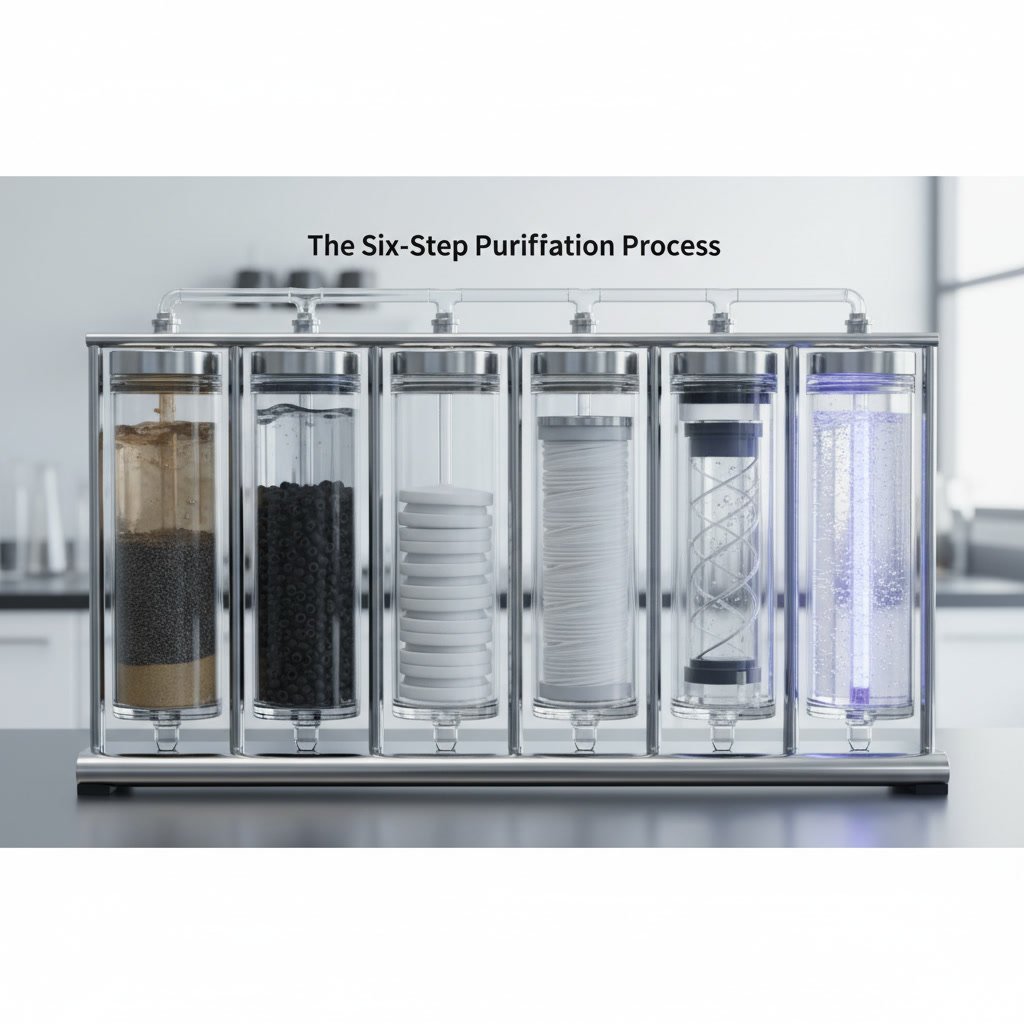
The Six-Step Purification Process Explained
Nevada Crystal Premium uses a comprehensive six-step process that positions carbon filtration stages at critical points:
- Water softening removes hardness minerals that would scale equipment and reduce efficiency
- Three-stage reverse osmosis eliminates dissolved solids, heavy metals, and most inorganic contaminants
- Carbon filtration removes organic chemicals, chlorine, and volatile compounds
- Micro-carbon filtration captures residual organics and emerging contaminants
- UV light treatment destroys bacteria, viruses, and other microorganisms
- Ozonation provides final disinfection and enhances oxygen content
This sequence ensures each technology operates at peak efficiency. Carbon filters last longer because reverse osmosis reduces their workload, and UV treatment works better on water already cleared of particles that could shield microorganisms.
How Filter Lifespan Affects Contaminant Removal
Carbon filters don’t stop working suddenly. They gradually lose capacity as adsorption sites fill with contaminants. A saturated filter still removes some compounds while allowing others to pass through, which means water quality degrades slowly rather than failing all at once.
Standard carbon filters in high-volume systems need replacement every six to 12 months depending on source water quality and daily usage. Micro-carbon filters typically last longer because they process water already cleaned by previous stages. Professional systems monitor flow rates and pressure differentials to schedule replacements before performance drops.
Home filter pitchers and refrigerator filters use carbon but rarely incorporate true micro-carbon stages. Their limited contact time and smaller carbon volume explain why they improve taste without achieving the purification level that customers experience when they set up professional water delivery.
Choosing Between Purified and Other Water Types
Understanding carbon filtration helps you evaluate different water options. Spring water undergoes minimal processing and retains natural minerals along with trace contaminants from the source. Alkaline water and electrolyte water start with purified water, then add back specific minerals for taste or pH adjustment.
Each water type serves different preferences, but only multi-stage purification with proper carbon filtration removes the widest range of contaminants. That foundation of purity matters whether you drink the water plain or use it for brewing coffee and preparing food.
Experience the Difference Multiple Filtration Stages Make
The dual carbon approach, combined with reverse osmosis and additional purification steps, creates water that tastes clean because it genuinely is clean. You notice the difference immediately in beverages and cooking, where nothing interferes with natural flavors.
Nevada Crystal Premium delivers water that has passed through all six purification stages, including both standard and micro-carbon filtration, to thousands of customers throughout the Las Vegas area. The process removes what other methods leave behind, giving you confidence in every glass.
Ready to enjoy truly purified water at your home or office? Call +17028920535 to schedule delivery and experience the quality that comes from comprehensive multi-stage purification with advanced carbon filtration technology.